

The system of record for research activity.
One canonical profile for every investigator, grant, publication, and appointment — with NIH CCSG Data Tables generated from live data. Built for universities, academic medical centers, and NCI-designated Cancer Centers.
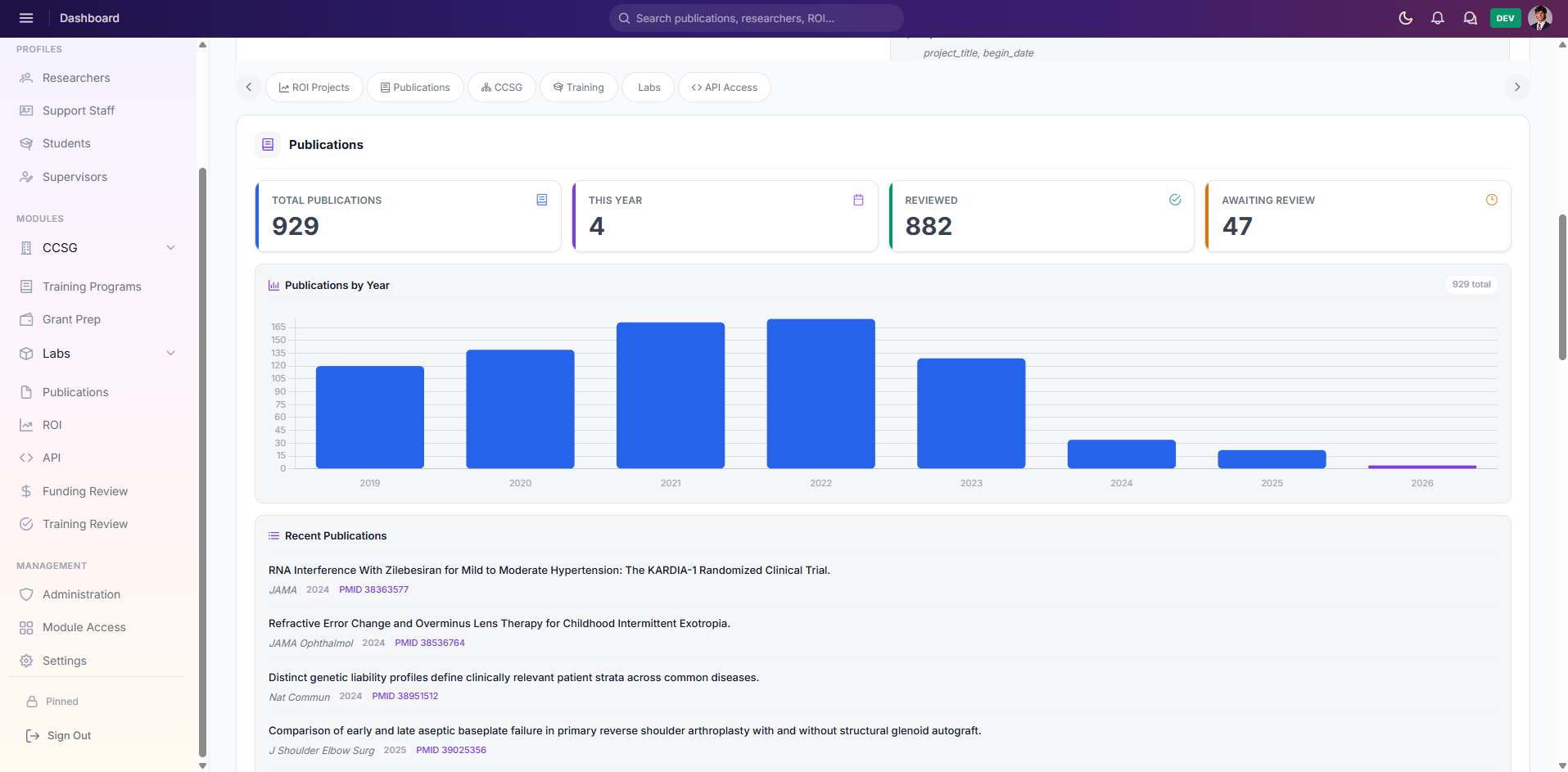
Research Logix stays current by reading directly from the authorities of record — publications refresh down to the PMID, funding reconciles against NIH RePORTER. You report from one place because it’s synced with the systems everyone else trusts.
SSO via Shibboleth and Microsoft Entra (SAML 2.0 / OAuth 2.0) · HTTPS-only
- PubMed
- NIH RePORTER
- eRA Commons
- ORCID
- iCite
- Dimensions
One profile. Everything attaches.
Most centers keep investigators in spreadsheets that never agree, then rebuild the same tables by hand every cycle. Research Logix inverts that: one canonical researcher profile is the anchor — maintain the record once, report from it forever.
- Investigator data scattered across spreadsheets that never agree
- CCSG table season: weeks of manual assembly and reconciliation
- Publications and grants live apart from the people they belong to
- One canonical researcher profile everything attaches to
- CCSG/P30 tables curated from live data, not rebuilt each cycle
- Funding, publications, and people tracked as one connected record
- NIH RePORTERGrantsAwards, funding sources, and periods.
- PubMed · iCitePublicationsScholarly output with clear attribution.
- TrainingAppointments, mentors, and intake.
- Program RolesMembership and leadership CCSG depends on.
- CCSG TablesNIH-ready Data & E-Data Tables.
- Shared ResourcesCore-facility links, including DT1C.
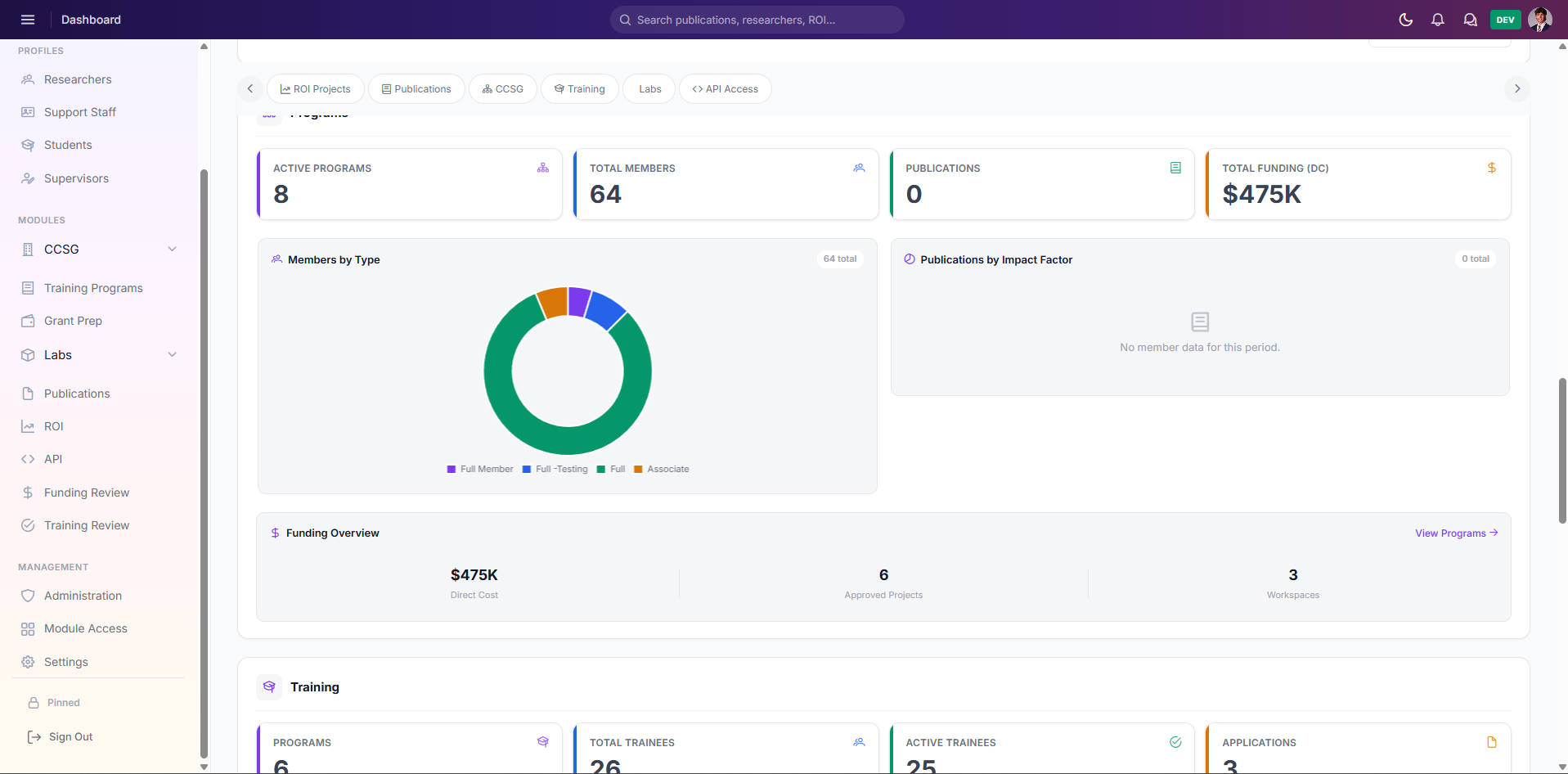
CCSG Data Tables, generated from live data.
Members, publications, and funding roll straight into NIH-ready CCSG Data Tables — DT1 through DT4, plus E-Data Tables — curated from live investigator profiles. No table season. No manual reconciliation.
Every figure traces back to the source record — so what you submit is defensible.
The same record runs your whole operation.
Because everything attaches to one profile, the rest of the platform draws on data you already maintain — no re-entry, no second source of truth.
Training and T32, spreadsheet-free.
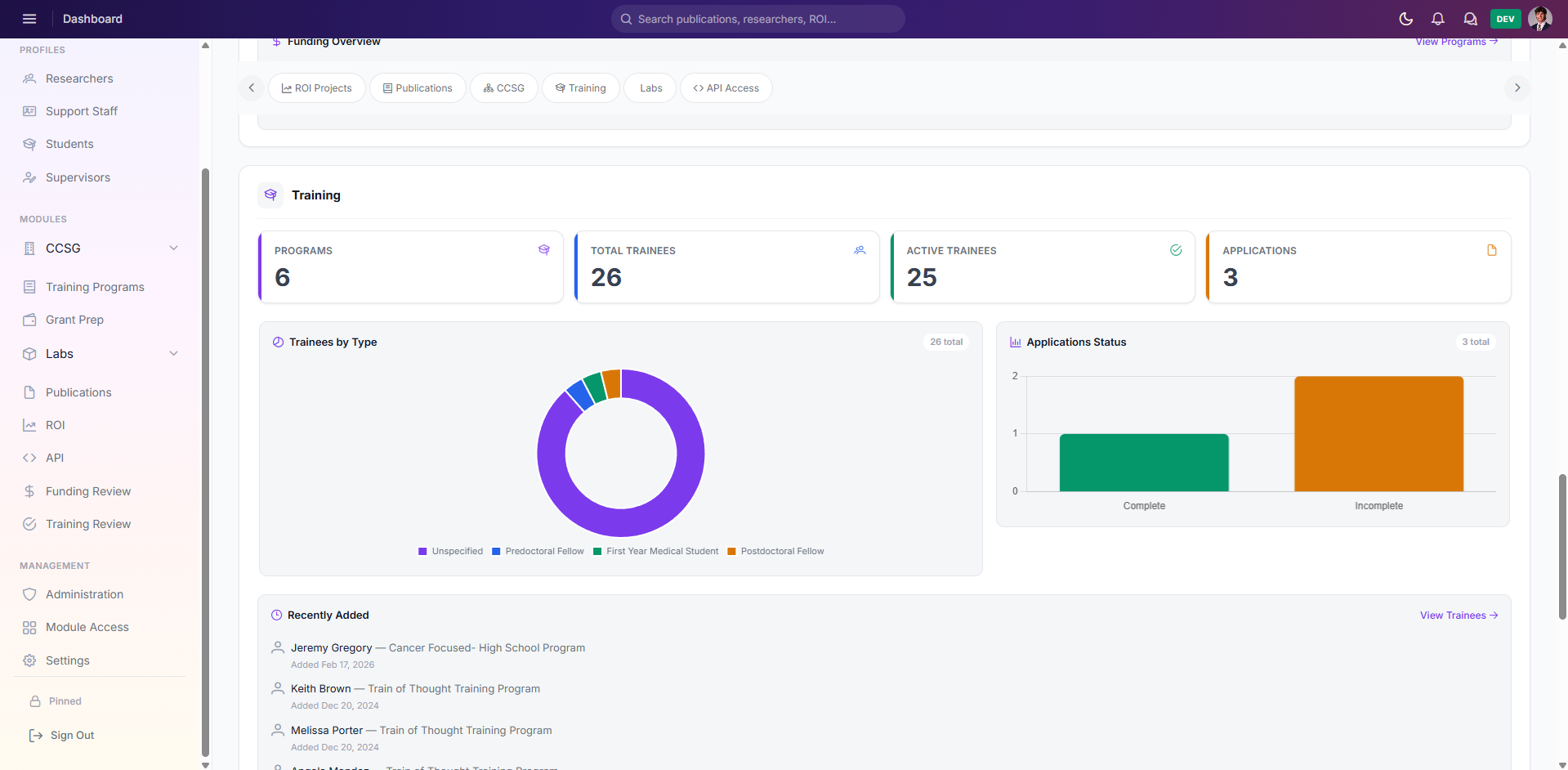
Programs, trainees, mentors, and application intake live on the same profiles — so T32 assembly draws on faculty data you already keep current. 0 programs, 0 trainees, application review built in.
- Which active programs still lack a leader?
- Which members' publications qualify for this CCSG reporting period?
- What is this investigator's full funding and publication record, in one view?
- Which faculty belong in the T32 submission — and is their data ready?
One platform, adopted at your pace.
Start with CCSG/P30, add Training, T32, and Shared Resources as you go. Every module reads from the same researcher profiles, so nothing is re-entered.
The system of record for investigators. Every publication, grant, and training appointment attaches to one researcher profile.
Walk through the real product.
Not a mockup — click through Research Logix yourself.
- 1One profile — grants, publications, appointments, and roles all trace back to a single researcher.
- 2CCSG tables generated from live profile data, not rebuilt by hand each cycle.